


Chemical Peeling
A chemical solution is applied to the skin that causes it to exfoliate and eventually peel off. Mild redness and swelling of the treated area can occur but usually subsides in few hours. The new, regenerated skin is usually smoother, have less pigmentary irregularities.
Superficial peel: targets only the outer layer of skin, to gently exfoliate it. It improves the appearance of mild skin discoloration and rough skin. It requires 1 to 7 days to heal. Example Salicyclic acid peel, yellow peel, Glycolic acid peel 15-30%
Medium peel: improve age spots, fine lines and wrinkles, freckles and moderate skin discoloration. It requires 7 to 14 days to heal. Example glycolic acid 50-70%, TCA 10-30% peel
Deep peel: The treatment removes moderate lines, age spots, freckles and shallow scars. It requires 14 to 21 days to heal. Example Phenol peel, TCA >30% peel
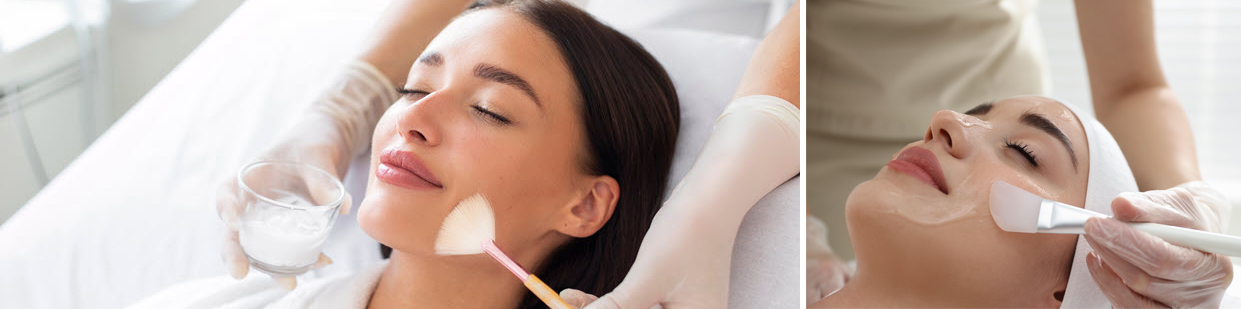
How Does Chemical Peel Work?
The chemical solution gently removes dead skin cells and triggers controlled exfoliation. As the old skin peels off, fresh, rejuvenated skin replaces it. The depth of peeling depends on the type and strength of the peel used.
Types of Chemical Peels
- Superficial Peel – Mild exfoliation for glow and mild pigmentation
- Medium Peel – Targets acne scars, pigmentation, and fine lines
- Deep Peel – Used for severe skin damage and deeper wrinkles
Benefits of Chemical Peeling
- Brighter and smoother skin
- Reduced pigmentation
- Improved acne control
- Stimulates collagen production
- Minimal downtime (for superficial peels)
Uses of chemical peels
- Acne scars
- Rejuvenation
- Hyperpigmentation, Melasma
- Sun damaged skin
- Wrinkles, Aging skin
Contraindications
- Nursing or pregnant.
- infections,
- active skin disease like psoriasis
- cut or broken skin
- sunburn
Frequently Asked Questions
- Acne and acne marks
- Pigmentation & melasma
- Sun damage
- Uneven skin tone
- Fine lines & mild wrinkles
- Dull skin