


Psoriasis
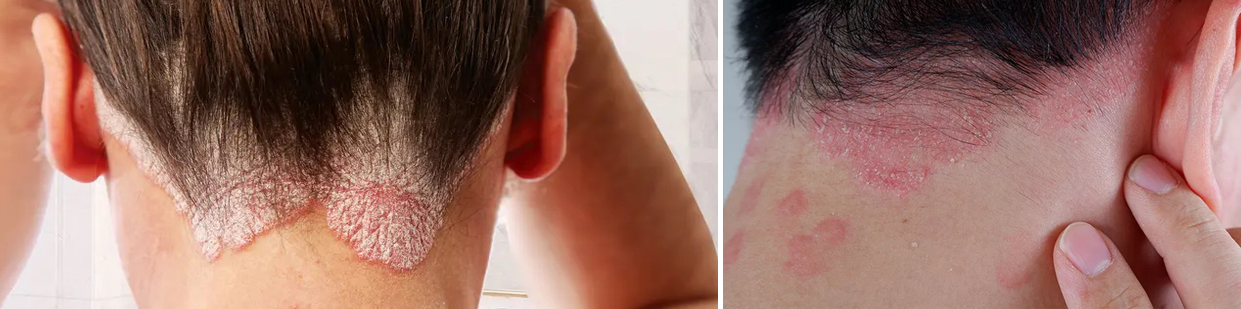
Psoriasis is a chronic skin problem, which occurs in genetically predisposed individuals. The patient will develop round, red, thick areas on the skin, with white flakes developing on the surface. It commonly affects the scalp, elbows, knees and buttocks, although any body site can be involved.
If treated properly, the disease can be very well controlled and the patient can have a very good quality of life.
Sometimes patients with psoriasis can develop arthritis, with pain and swelling in joints. In such cases treatment is necessary at earliest to prevent joint deformities
Treatment includes creams, Ointments and lotions, phototherapy and in cases of extensive disease oral medications are necessary.
It commonly affects:
- Scalp
- Elbows
- Knees
- Lower back and buttocks
Can Psoriasis Be Controlled?
Yes. With proper medical treatment and regular follow-up, psoriasis can be well controlled, allowing patients to maintain a good quality of life. Although it is a long-term condition, modern dermatological treatments help reduce flare-ups and symptoms effectively.
Psoriatic Arthritis
In some patients, psoriasis may also affect the joints. This condition is called psoriatic arthritis, which can cause:
- Joint pain
- Swelling
- Stiffness
Early treatment is very important to prevent permanent joint damage or deformities.
Treatment Options
Treatment depends on the severity and extent of the disease:
- Medicated creams, ointments & lotions
- Phototherapy (light therapy)
- Oral medications for moderate to severe cases
- Regular monitoring and lifestyle guidance
Proper diagnosis and personalized treatment planning are essential for long-term control.
Frequently Asked Questions
- Genetic factors
- Stress
- Infections
- Certain medications
- Skin injury
- Weather changes
- Red patches with silvery-white scales
- Itching or burning sensation
- Dry, cracked skin
- Thickened or pitted nails
- Joint pain (in some cases)