


PRP Transplant
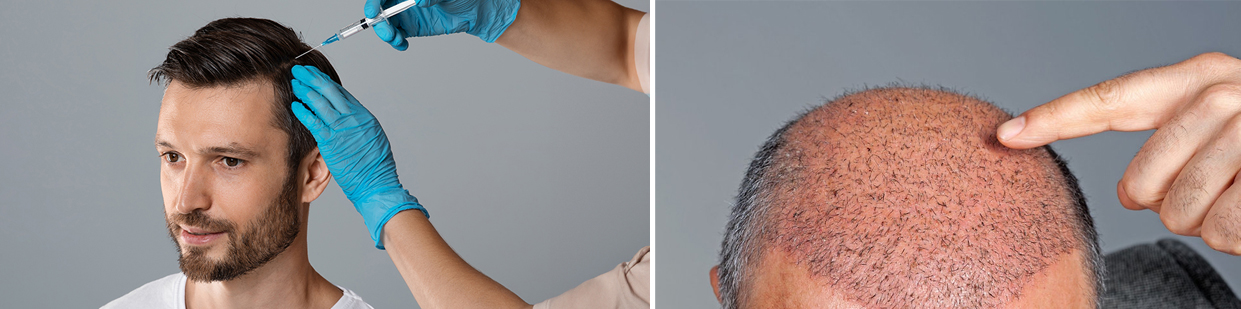
Platelet-Rich Plasma (PRP) is an advanced regenerative treatment in which a high concentration of platelets is extracted from a small amount of the patient's own blood and injected into targeted areas to promote healing and tissue regeneration. Platelets contain powerful growth factors that stimulate cell repair, improve blood circulation, and enhance collagen production. The procedure begins with drawing a small blood sample, which is then processed in a centrifuge to separate the platelet-rich portion from other blood components. This concentrated plasma is carefully injected into the scalp for hair restoration or into the skin for rejuvenation.
PRP therapy is widely used for treating hair thinning, androgenetic alopecia, acne scars, dull skin, fine lines, and overall skin rejuvenation. In hair treatments, PRP strengthens hair follicles, reduces hair fall, and improves hair density over time. For skin applications, it promotes collagen formation, improves texture, and gives a natural glow. Because PRP uses the patient's own blood, the risk of allergic reactions or major side effects is minimal. Mild redness, swelling, or slight discomfort may occur temporarily after the procedure. Multiple sessions are usually recommended for optimal and long-lasting results, making PRP a safe, natural, and effective non-surgical treatment option.
How does it act?
PRP contains abundant platelets. These platelets are natural source of large number of growth factors like VEGF,FGF, TGF, PDGF etc. So when activated PRP is injected into skin, large amount of growth factors are released which stimulate a healing like response or stimulate cells to produce new tissue. For hairs it causes growth of the hair follicles by stimulating the stem cells located in the dermal papilla as well as other structures of the hair follicles.
Procedure
It is prepared from patient own blood. Blood is taken in special vials and then centrifuged and PRP component is extracted. It takes 30-45 min for complete procedure and patient can go home immediately.
Uses of PRP
Androgenetic alopecia- it especially helpful to patients with diffuse thinning and active hair fall. Also it is very useful in female pattern alopecia. Usually 3 to 4 sessions are performed at 1monthly intervals. Besides this it can be used alongwith hair transplant for better and faster growth of grafted hairs.Other uses are skin rejuvenation, treatment of acne scars, wounds, striae etc.
Does PRP has any side effects?
As PRP is prepared from patient own blood, it is very safe.
How PRP is Prepared
- A small amount of blood is drawn from your arm.
- The blood is placed in a centrifuge machine to separate components.
- The platelet-rich portion is collected.
- PRP is injected into the targeted area (scalp or skin).
PRP for Hair Loss
PRP stimulates hair follicles and improves blood supply to the scalp.
Benefits include:
- Reduced hair fall
- Increased hair thickness
- Improved hair density
- Support after hair transplant